
female fertility doctor in PCMC
Women Infertility Specialist in Wakad
Female infertility treatment at La Femme Fertility in Wakad, Pune covers ovulation disorders, tubal factor, endometriosis, low ovarian reserve and unexplained infertility. Dr. Bhagyashri Naphade, an ASRM-awarded IVF specialist with 21 years' experience, offers personalized treatment ranging from ovulation induction to IVF, with special expertise in low ovarian reserve and IVF failures.
At every phase of your women’s health journey, our dedicated team at NariHealth is here to provide guidance, answer your queries, and facilitate connections with experienced healthcare professionals. Kindly share your contact information, and our welcoming reception team will reach out to assist you promptly.
Female infertility has many faces. For some women, it is the frustration of irregular cycles that make timing impossible. For others, it is a blocked tube, an ovarian cyst, or endometriosis quietly working against conception. And for some, all tests come back normal yet pregnancy remains elusive - the particularly maddening diagnosis called "unexplained infertility."
Dr. Bhagyashri Naphade
SourceWhatever the cause, the path forward starts with accurate diagnosis. At La Femme Fertility in Wakad, Dr. Bhagyashri Naphade systematically identifies the specific barrier to conception and builds a treatment plan that addresses it directly - not a generic protocol, but one designed for your body, your diagnosis and your goals.

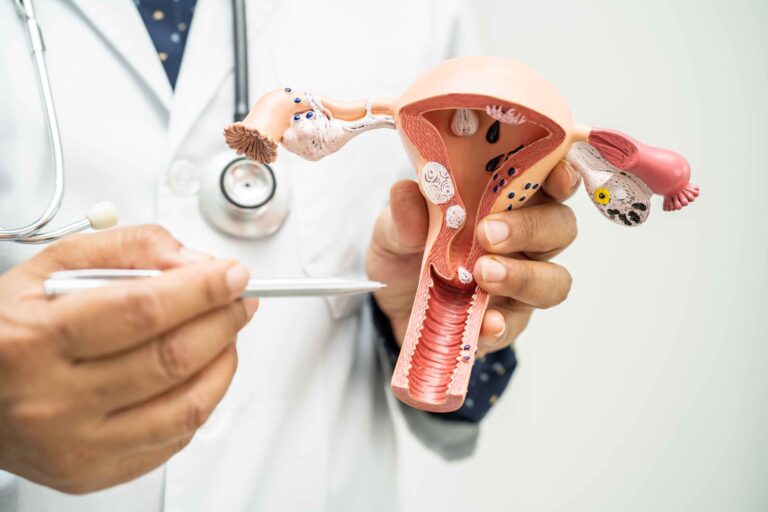
Common Causes of Female Infertility
- Ovulation Disorders: The most common category, accounting for about 25-30% of female infertility. PCOD/PCOS is the leading cause, but thyroid disorders, hyperprolactinemia and hypothalamic dysfunction also disrupt ovulation.
- Tubal Factor: Blocked, damaged, or absent fallopian tubes prevent the egg and sperm from meeting. Causes include previous pelvic infections, ruptured appendicitis, endometriosis and prior ectopic pregnancy.
- Endometriosis: Endometrial-like tissue growing outside the uterus causes inflammation, adhesions and structural damage that impairs fertility. Affects an estimated 10-15% of reproductive-age women.
- Low Ovarian Reserve: Reduced egg quantity and quality, measured by AMH levels and antral follicle count. This is one of Dr. Naphade’s primary areas of clinical interest and research.
- Uterine Factors: Fibroids, polyps, adenomyosis and congenital uterine anomalies can interfere with implantation or cause recurrent miscarriage.
- Unexplained Infertility: When all standard tests are normal but conception does not occur. This accounts for approximately 15-20% of infertility cases and requires an experienced specialist to identify subtle contributing factors.
- Treatment Pathways at La Femme
Treatment follows a logical progression from less invasive to more advanced, unless the diagnosis calls for a specific intervention upfront.
Ovulation Induction: Oral medications (letrozole, clomiphene) to trigger egg development and release, monitored with ultrasound. First-line treatment for ovulation disorders, particularly PCOD.
IUI with Controlled Ovarian Stimulation: Combining ovulation induction with intrauterine insemination for unexplained infertility, mild male factor, or cervical factor infertility.
Laparoscopic Surgery: For tubal blockages, endometriosis, fibroids and ovarian cysts. Dr. Naphade often performs diagnostic-cum-therapeutic laparoscopy – diagnosing and treating in the same sitting.
IVF and ICSI: When simpler approaches are insufficient or the diagnosis warrants direct assisted reproduction. Dr. Naphade’s protocols are individualized, particularly for patients with low ovarian reserve or previous IVF failures.
Ovarian PRP: Emerging treatment for women with diminished ovarian reserve, offered as part of a comprehensive plan when appropriate.
- Why Patients Trust La Femme for Female Infertility Treatment?
Navigating the challenges of female infertility can be an emotional and taxing journey, which is why women across Pune trust La Femme for a deeply personalized and scientifically grounded approach. Unlike high-volume fertility centers, Dr. Bhagyashri Naphade provides direct, one-on-one care, ensuring that the same expert who maps your diagnostic scans is the one performing your procedures.
Our patients value our “Fertility-First” philosophy, which prioritizes conservative treatments and hormonal balancing before moving to advanced ART like IVF. By combining international evidence-based protocols with a compassionate, judgment-free environment, we ensure that every woman feels heard, supported, and empowered with an honest roadmap toward her dream of motherhood.
- Female Infertility in Pune: Facts & Figures (2025 - 2026)
Researching the female infertility landscape in Pune for 2025–2026 reveals a complex interplay between medical conditions, lifestyle changes in a rapidly growing urban hub, and a significant surge in advanced medical intervention.
In Pune’s fast-paced environment, female factor infertility now accounts for approximately 45% to 50% of all clinical cases. The data suggests that for modern urban women in Pune, the journey to motherhood is increasingly being influenced by late marriages and high-stress professional lives, particularly in IT corridors like Wakad and Hinjewadi.
- Prevalence of PCOS: Polycystic Ovary Syndrome (PCOS) remains the leading cause of anovulatory infertility in Pune, with an estimated 1 in 5 women (approx. 20%) diagnosed. This is largely attributed to sedentary routines and dietary shifts.
- The Age Factor: There has been a 25% increase in women seeking fertility preservation (Egg Freezing) or ART treatments after the age of 35. Medical data confirms that success rates for IVF in Pune hover between 50-60% for women under 35, but drop significantly to 10-20% for those over 40.
- Endometriosis Surge: Approximately 25% of women currently undergoing infertility treatment in Pune are diagnosed with Endometriosis. A striking 2026 study highlights that women with both PCOS and Endometriosis face nearly double the odds of infertility challenges.
- Success of Advanced ART: Pune has seen a 30% rise in the adoption of “add-on” technologies. Procedures like ERA (Endometrial Receptivity Analysis) and PGT (Preimplantation Genetic Testing) are now becoming standard for couples who have experienced recurrent IVF failures.
- Tubal & Uterine Factors: Blocked fallopian tubes (often due to past infections) and uterine fibroids account for nearly 15-20% of female-related infertility visits in local clinics.
- Cumulative Success Rates: While the first IVF cycle in 2026 has a success rate of about 45%, Pune’s top-tier clinics report a cumulative success rate of 75-85% after 3 to 4 cycles for women under the age of 35.
- Lifestyle & Environmental Impact: Emerging research in 2026 suggests that chronic workplace stress and high levels of “Endocrine Disrupting Chemicals” (EDCs) in urban Pune are contributing to an overall decline in ovarian reserve (AMH levels) among younger women.
Frequently Asked Questions
At what age does female fertility start declining?
Fertility begins declining gradually after age 30 and more significantly after 35. After 40, the decline accelerates. However, many women conceive successfully in their late 30s and early 40s with appropriate treatment.
How long should I try before seeking help?
If you are under 35, see a specialist after 12 months of trying. If you are over 35, after 6 months. If you have known risk factors (PCOD, endometriosis, irregular periods), do not wait – consult sooner.
Can lifestyle changes improve fertility?
Yes. Maintaining a healthy weight, managing stress, quitting smoking, limiting alcohol and addressing nutritional deficiencies can all improve fertility outcomes. However, lifestyle changes alone may not be sufficient if there is an underlying medical condition.